The exhibition 'What Are We Queuing Here for?' is open.
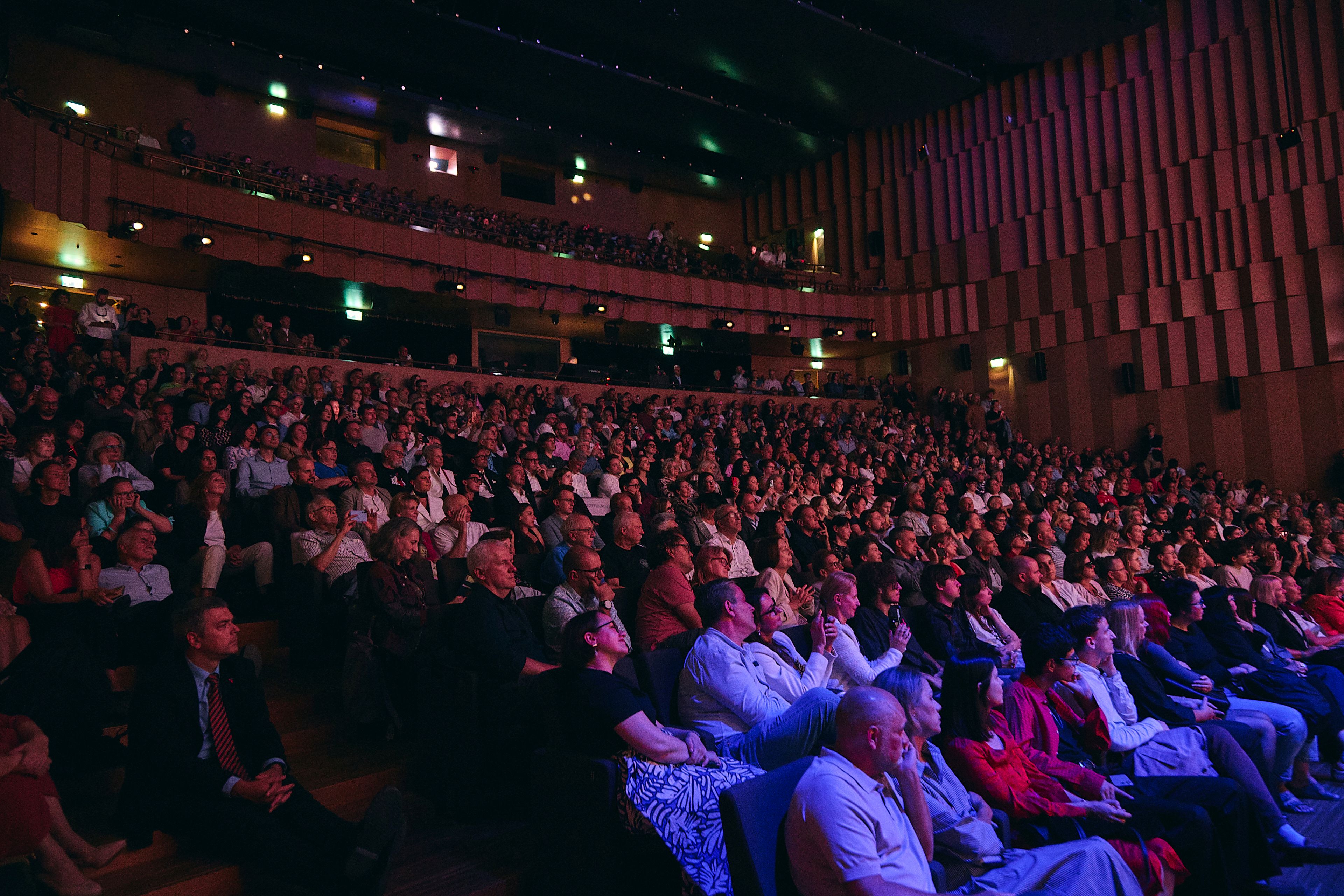
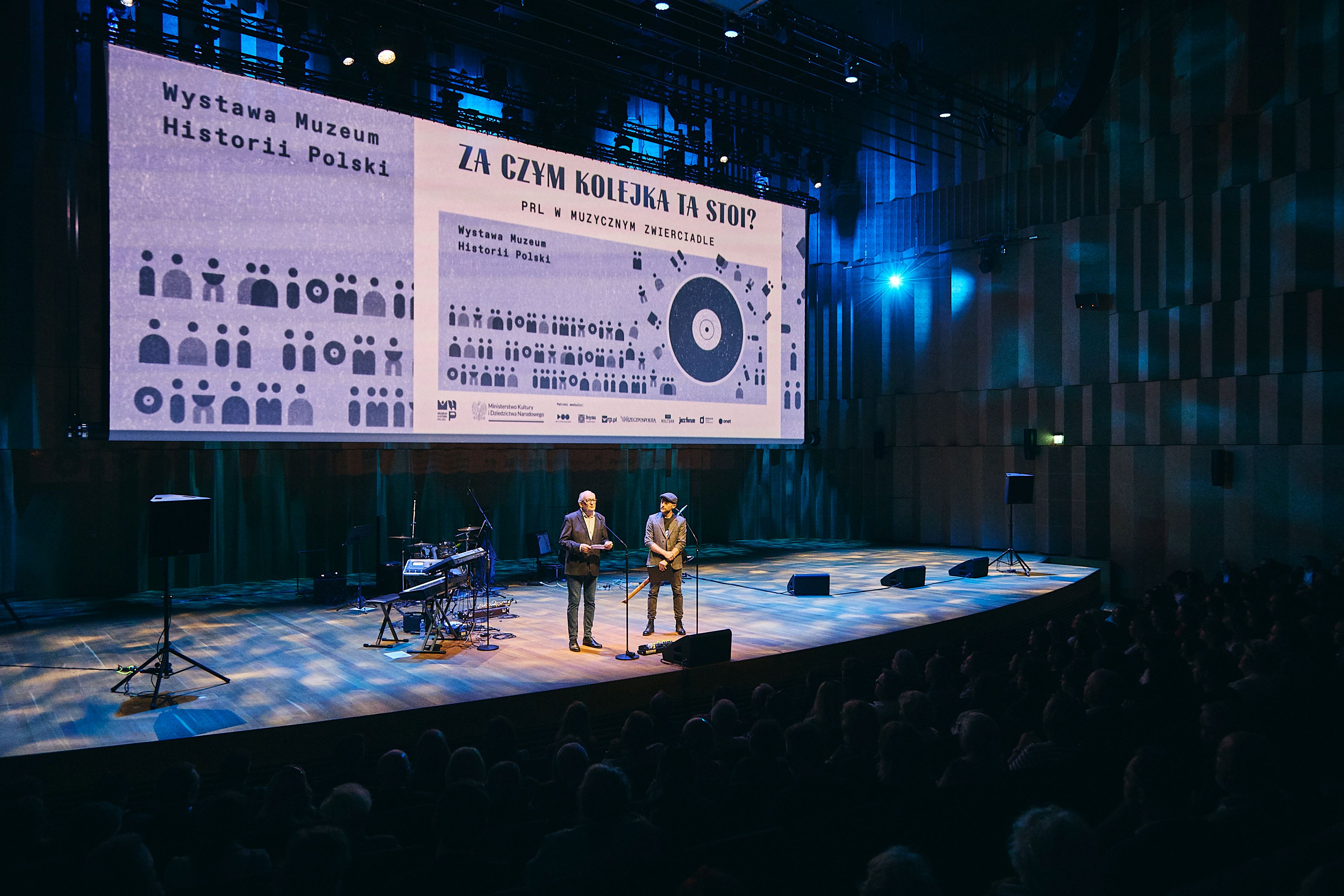
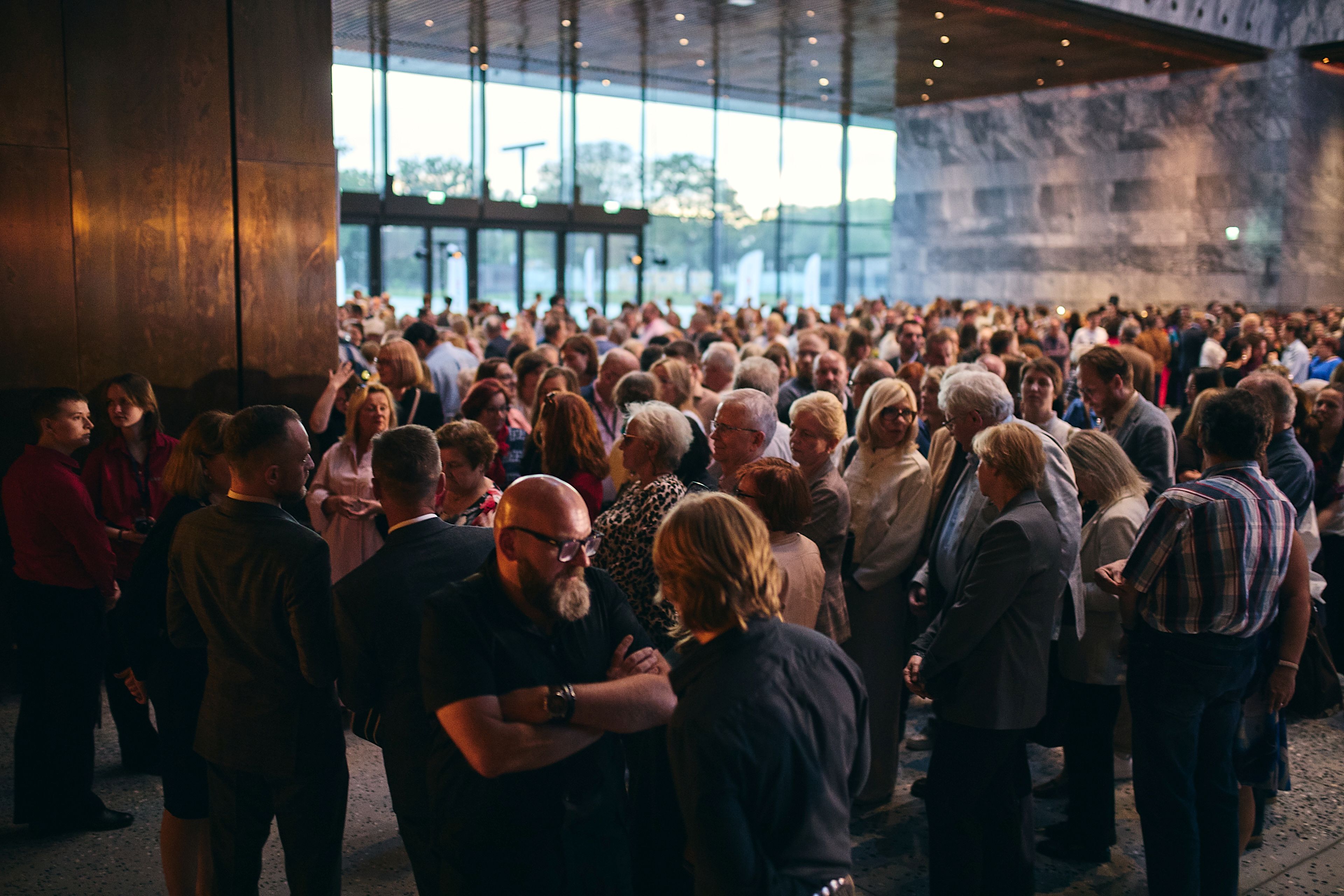
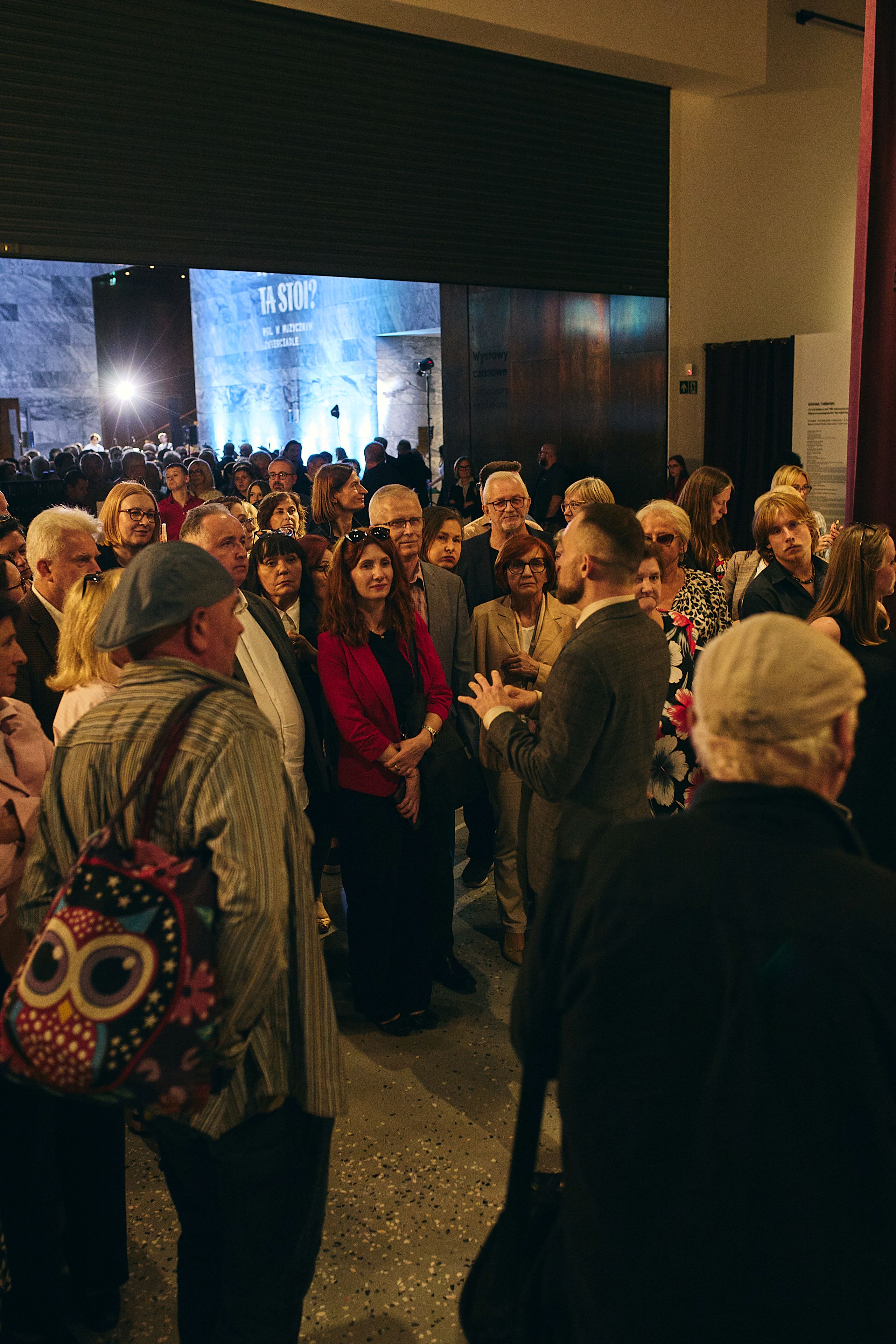
Sept. 2, 2026, marked the opening of the exhibition 'What Are We Queuing Here for? The Polish People's Republic Reflected in Music' at the Polish History Museum. The official opening was attended, among others, by the Minister of Culture and National Heritage Marta Cienkowska and the Director of the Polish History Museum Professor Marcin Napiórkowski. Representatives of the state authorities, the Sejm and Senate, and the presidential administration also attended, along with the representatives of museums in Warsaw and elsewhere in Poland, as well as the local authorities of the city’s district Żoliborz.
Music in the Polish People’s Republic (abbreviated PRL) was not mere entertainment. It could be a tool of propaganda, a language of rebellion, a way of coping with the drabness of everyday life, a space of freedom, and a place where dreams of a world on the other side of the Iron Curtain were born. The Polish History Museum’s latest exhibition unveils this particular part of history.
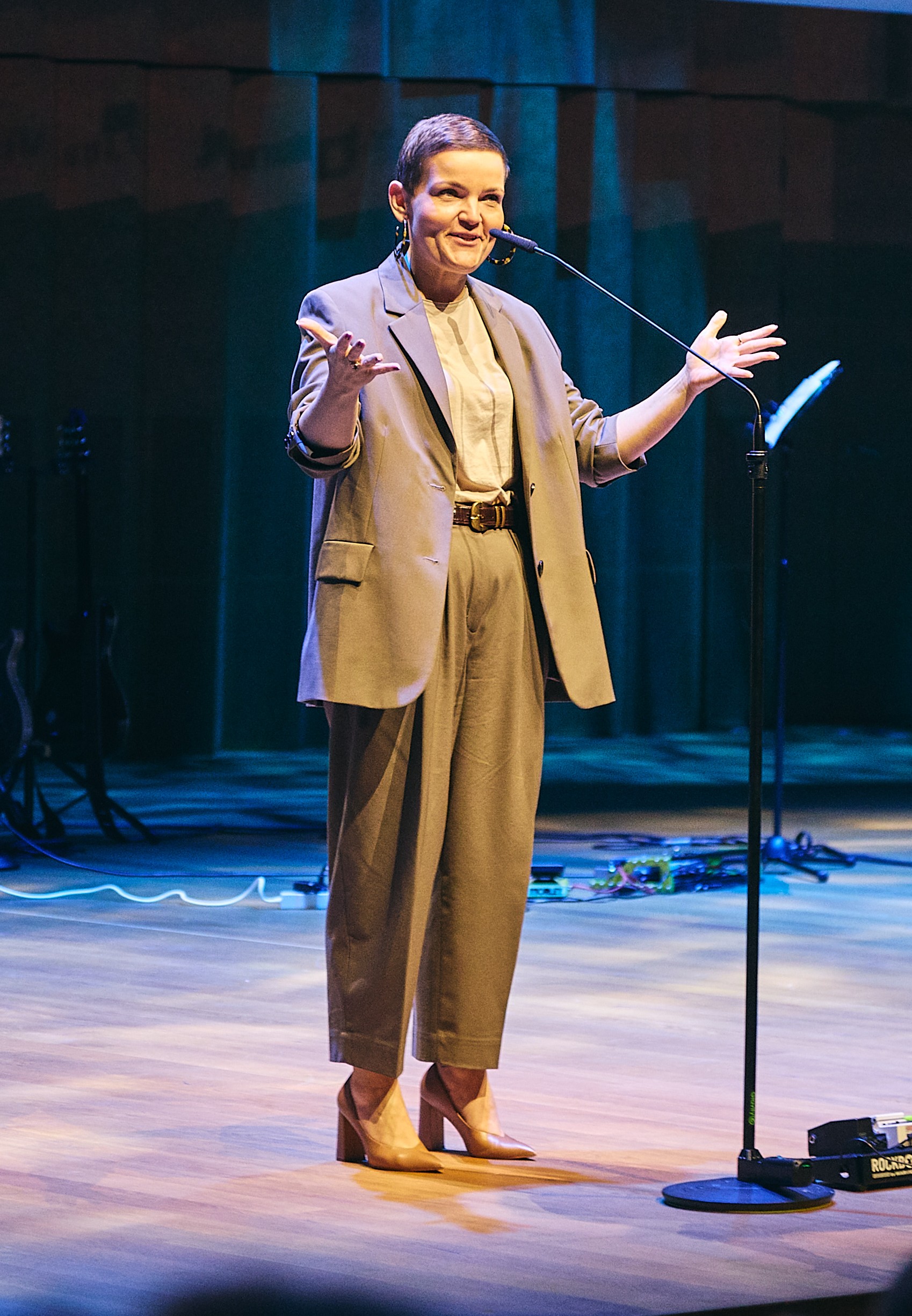
‘I would like to point out that this is probably the largest opening I have ever attended, so congratulations on the tremendous turnout. I was born in 1987, so I know the period of the Polish People’s Republic mainly from my parents’ stories, but the music from that era remained present in my home for many years afterward. I know all these songs by heart, and I hope to be able to sing along with you today. I agree with the director that singing and culture have tremendous power to convey emotions and resistance, but above all, to create a sense of community. We also have a wonderful choir at the Ministry of Culture, so I am throwing down the gauntlet to the Polish History Museum Choir. And next year marks the centenary of the Polish national anthem—I hope that together we can organize a great national sing-along.’
Minister of Culture and National Heritage Marta Cienkowska
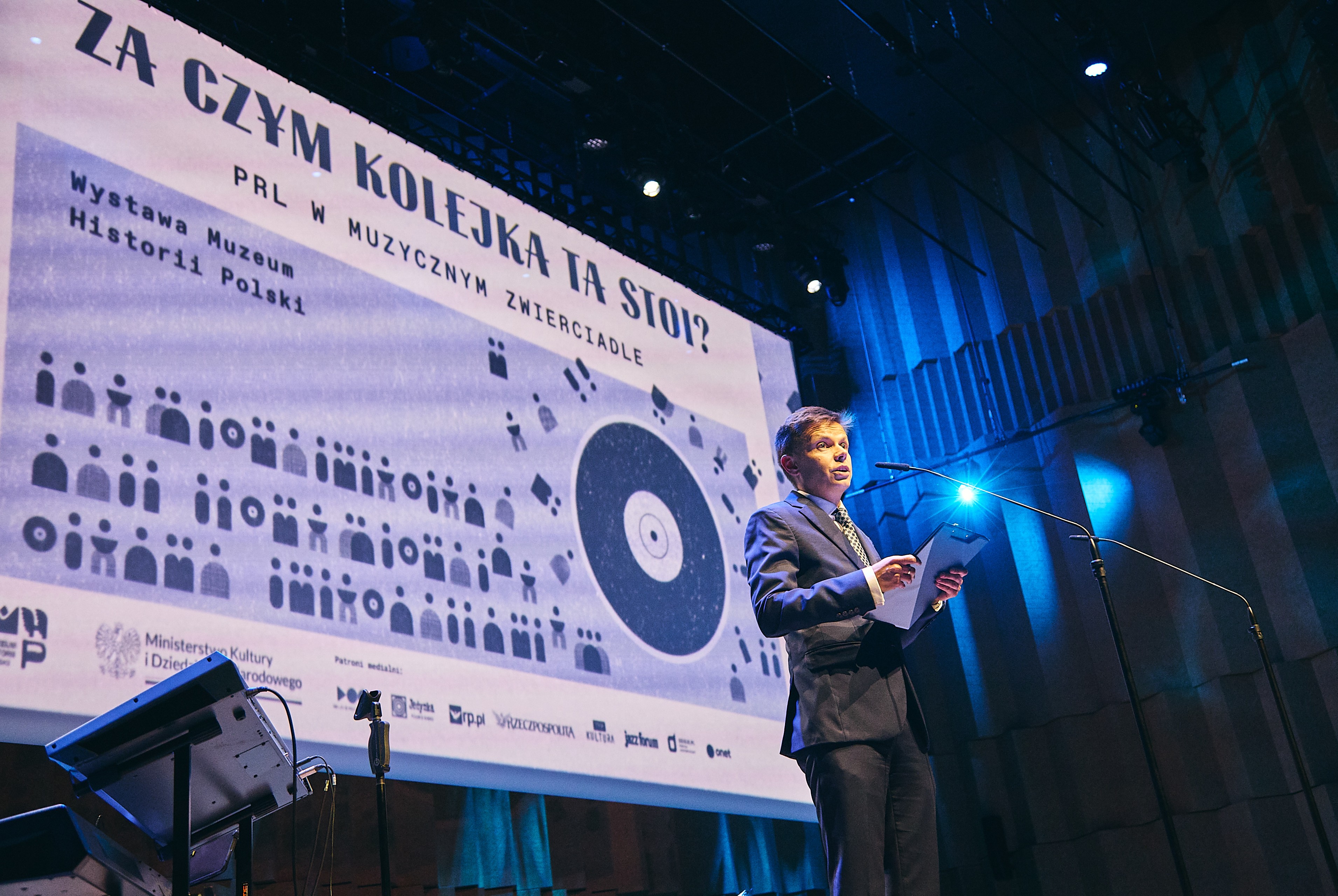
‘Cut off from the world by noise-cancelling headphones, immersed in our own playlists, we have somehow lost the courage to sing together. We still hum from time to time, and sometimes even sing, but we do it separately, alone, embarrassed by our own voices. The exhibition 'What Are We Queuing Here for?' is not only a story about the power of music. It is about how music helped people survive, created spaces of freedom, and changed our history. Above all, it is an extraordinarily timely invitation to rediscover the strength built by a chorus of human voices seeking harmony, even in the most difficult moments.’
Director of the Polish History Museum Prof. Marcin Napiórkowski
‘We are not fascinated by the Polish People's Republic, nor are we trying to recreate it. We are telling the story of people who, living in a world of permanent shortages and restrictions, had to find ways of responding to that reality. The music presented in the exhibition 'What Are We Queuing Here for?' is both a lens and a mirror, since it allows us to look at more than four decades of Polish history through emotions, everyday life, and the diversity of human attitudes.’
Lead Curator Krzysztof Banach
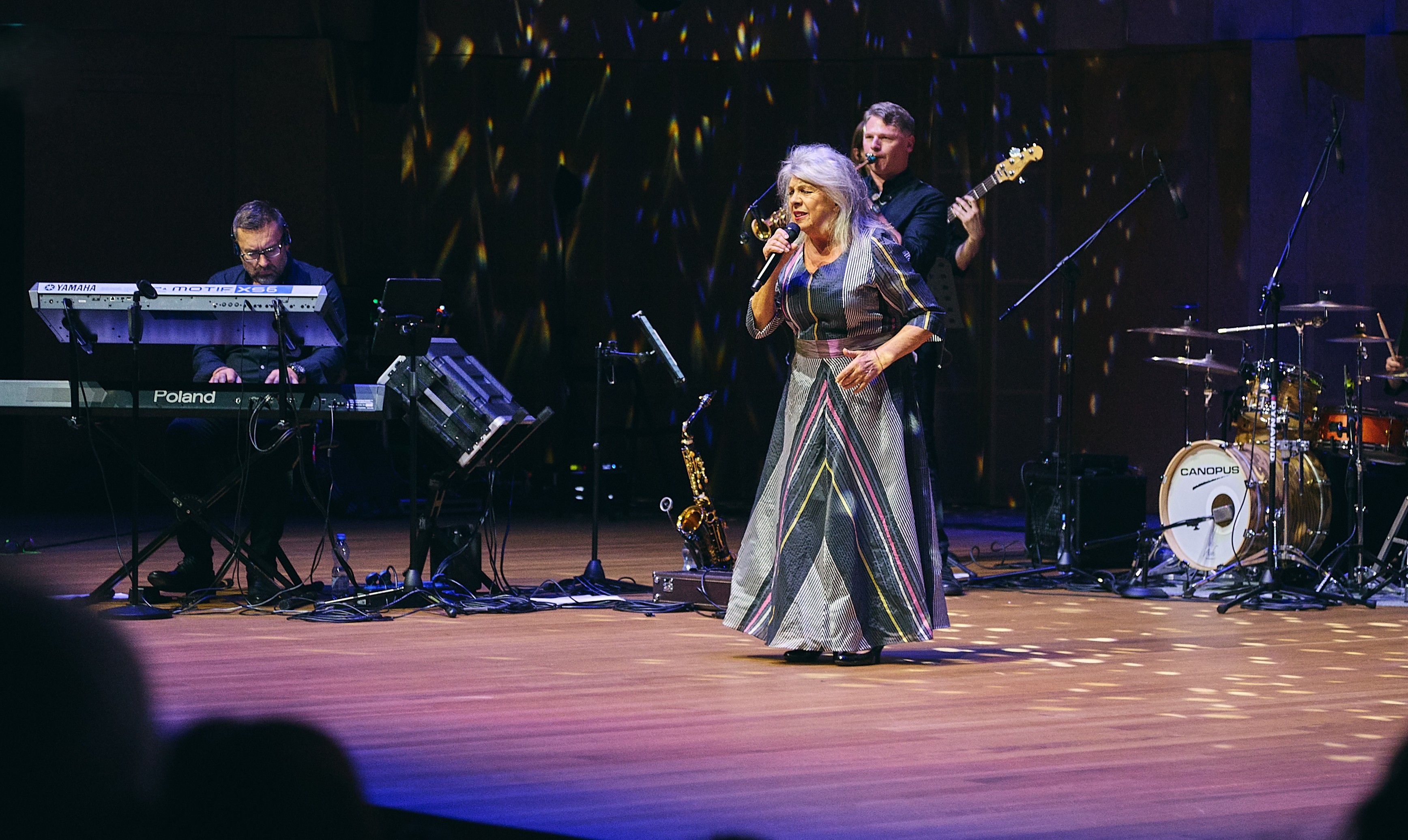
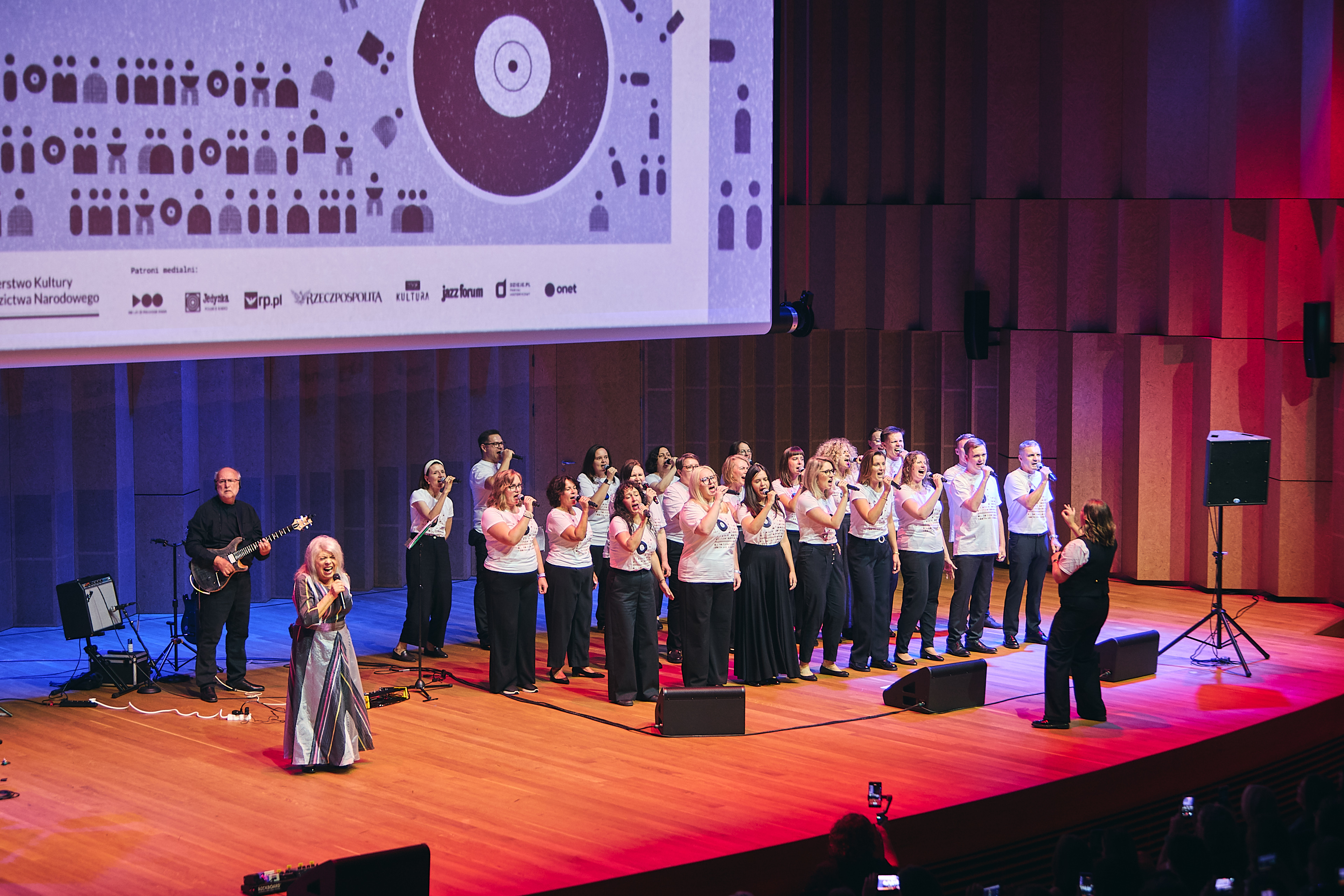
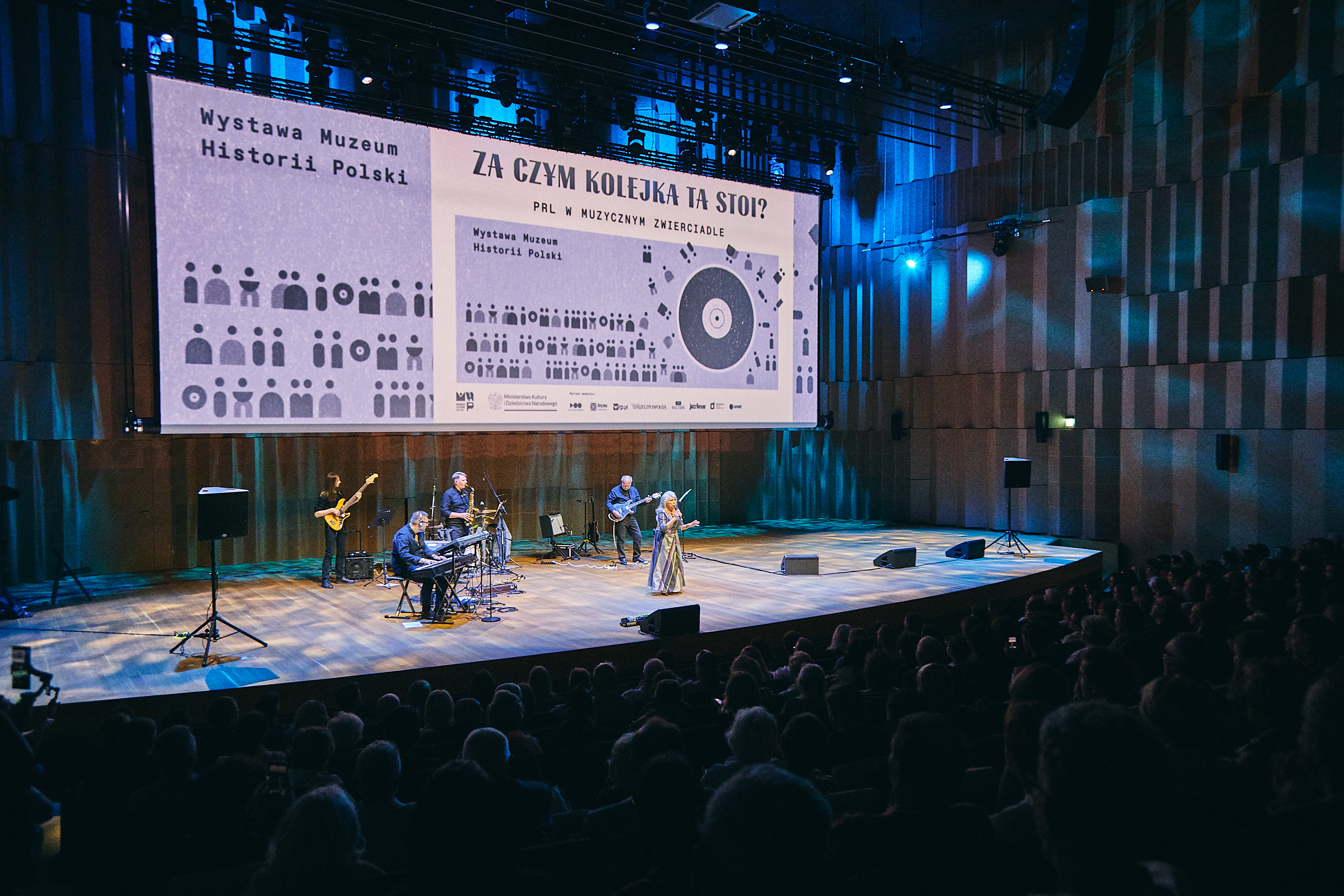
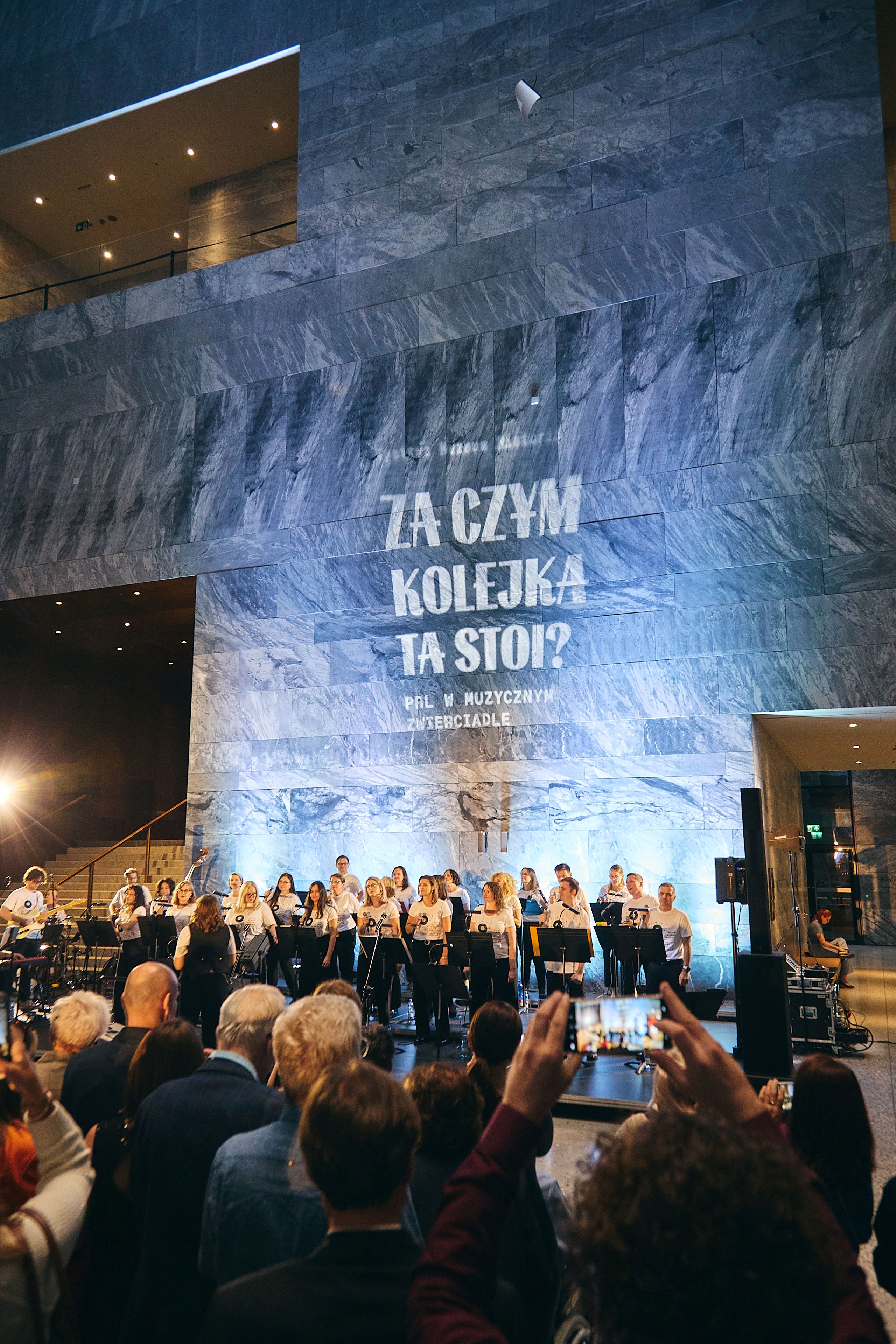
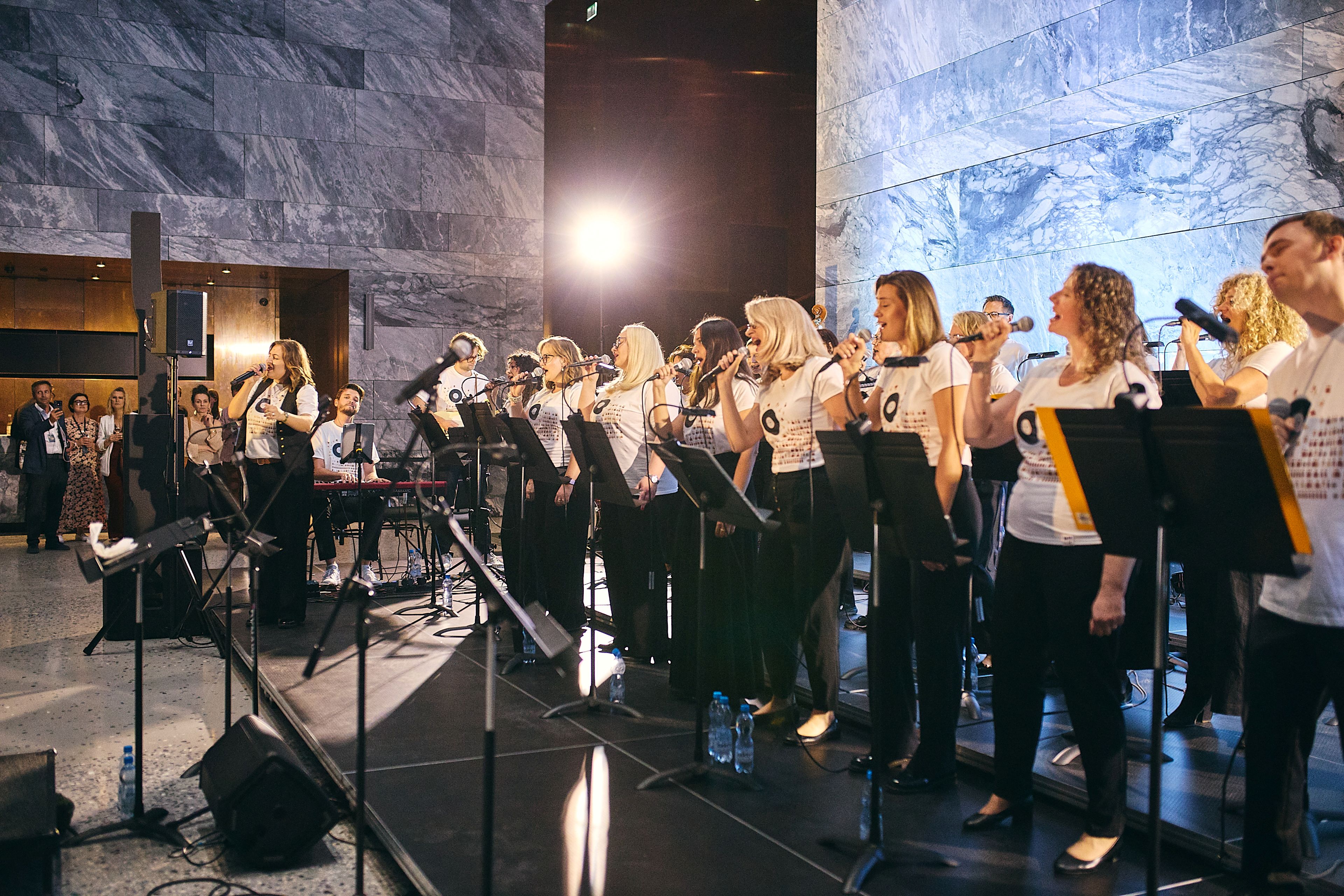
Words quickly turned into action, as the evening was filled with music – as befitted this exhibition. Krystyna Prońko performed on stage, while the Choir of the Polish History Museum, conducted by Ola Ptaszyńska and accompanied by the band Doberman got the guests singing together. The programme included, among others, the hits like Lombard’s ‘Szklana pogoda’ (‘Glass Weather’), Maryla Rodowicz’s ‘Małgośka,’ (‘Maggy’) and ‘Psalm stojących w kolejce’ (‘Psalm of Those Standing in Line’) from Krystyna Prońko’s repertoire.
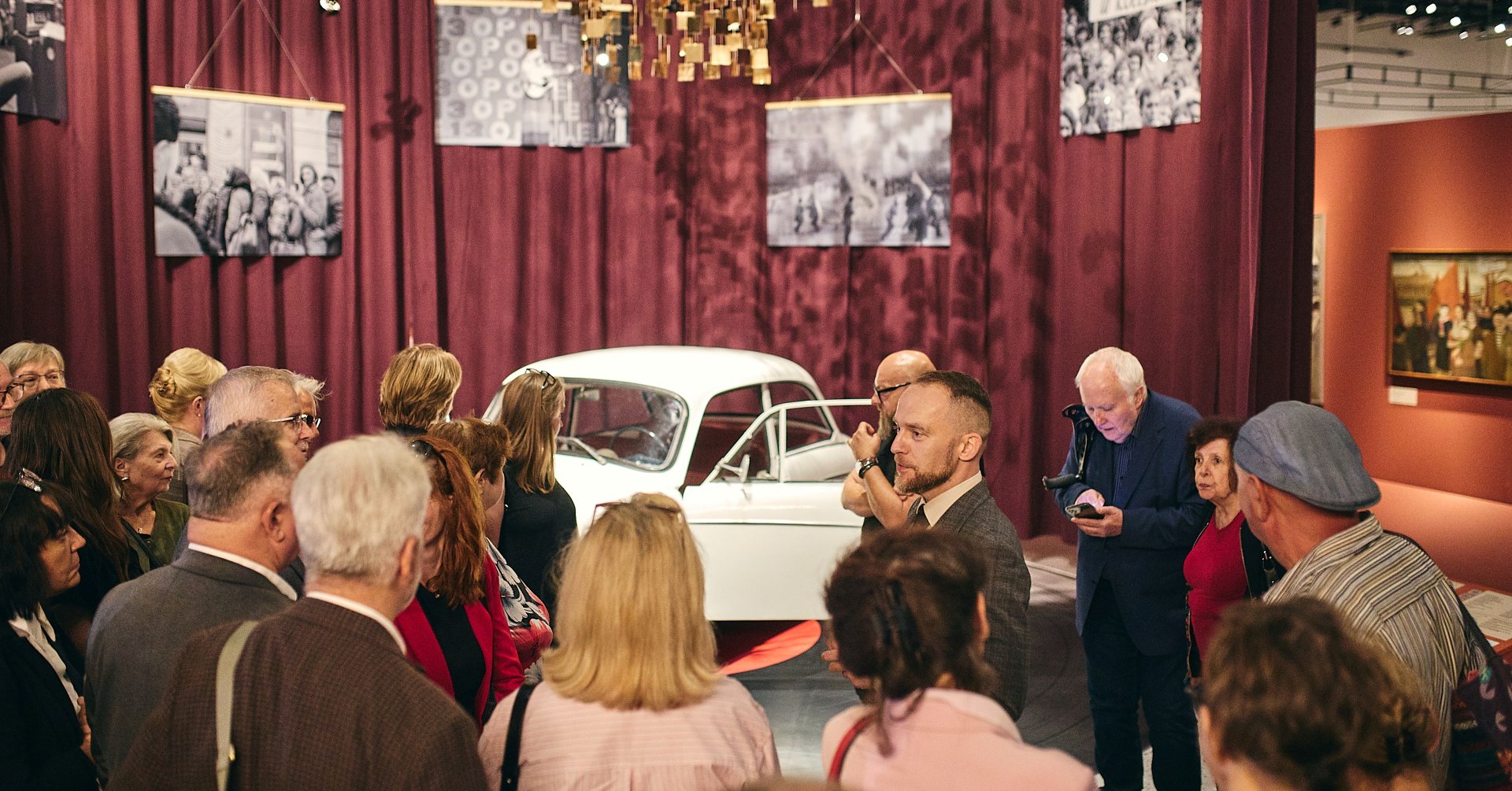
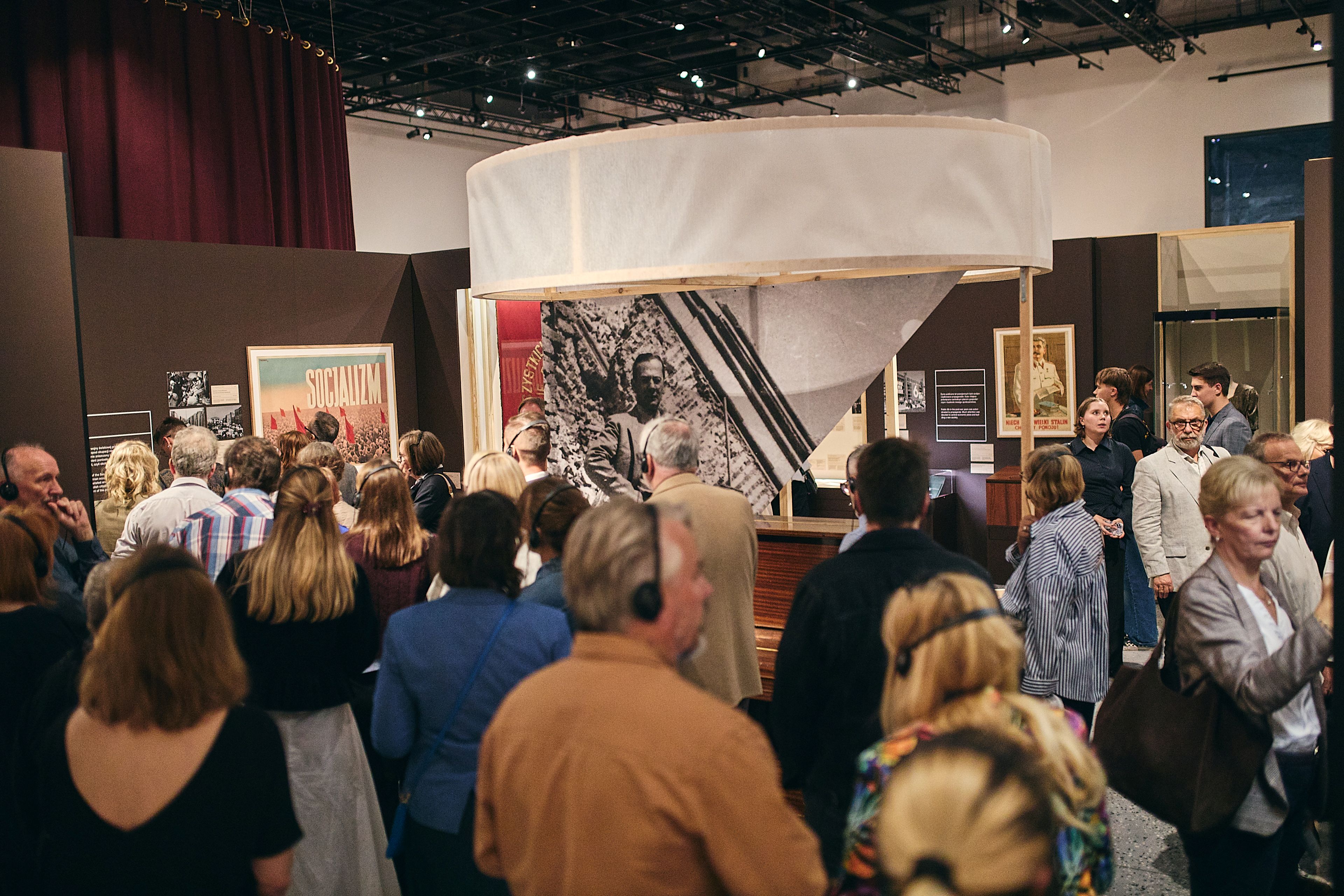
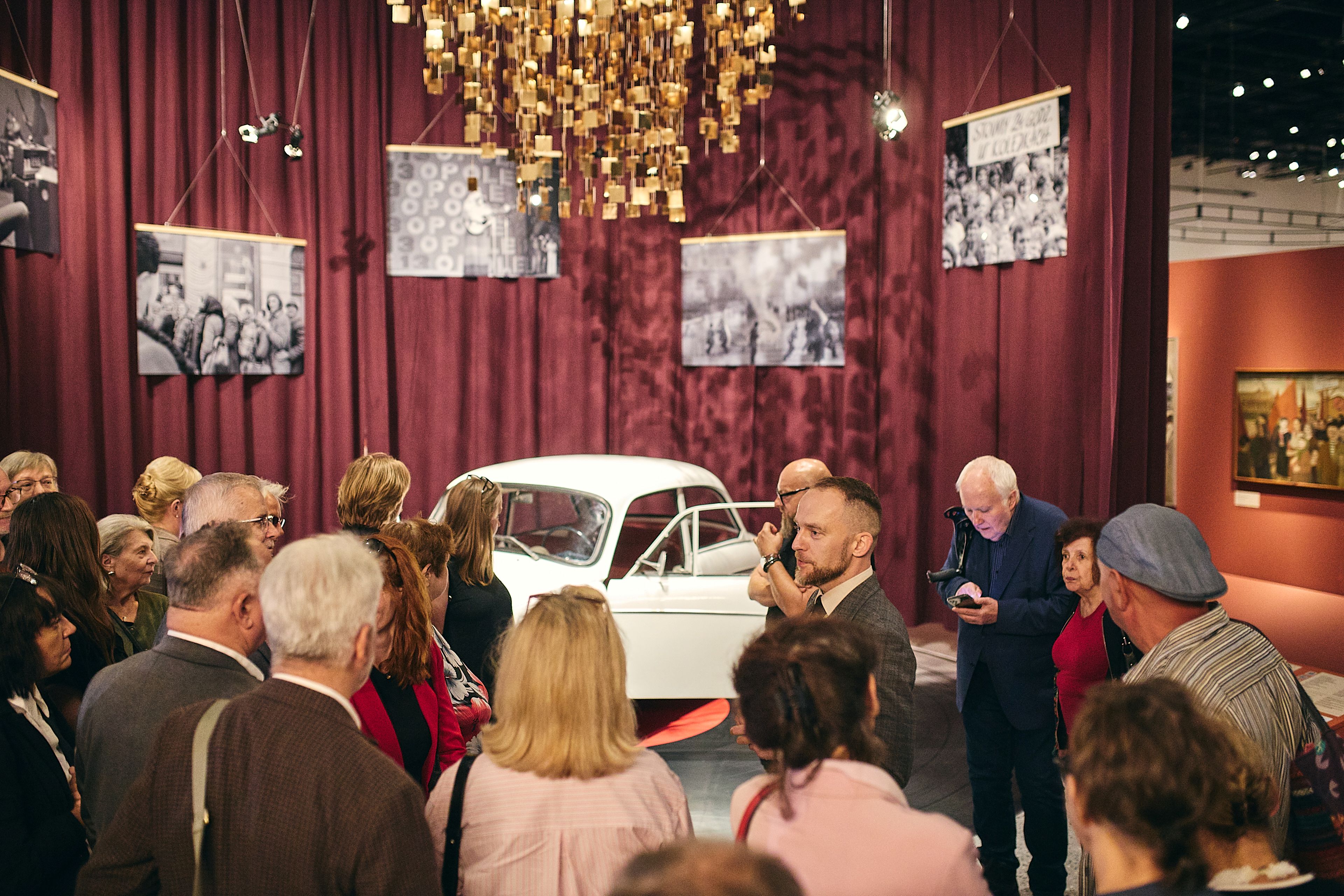
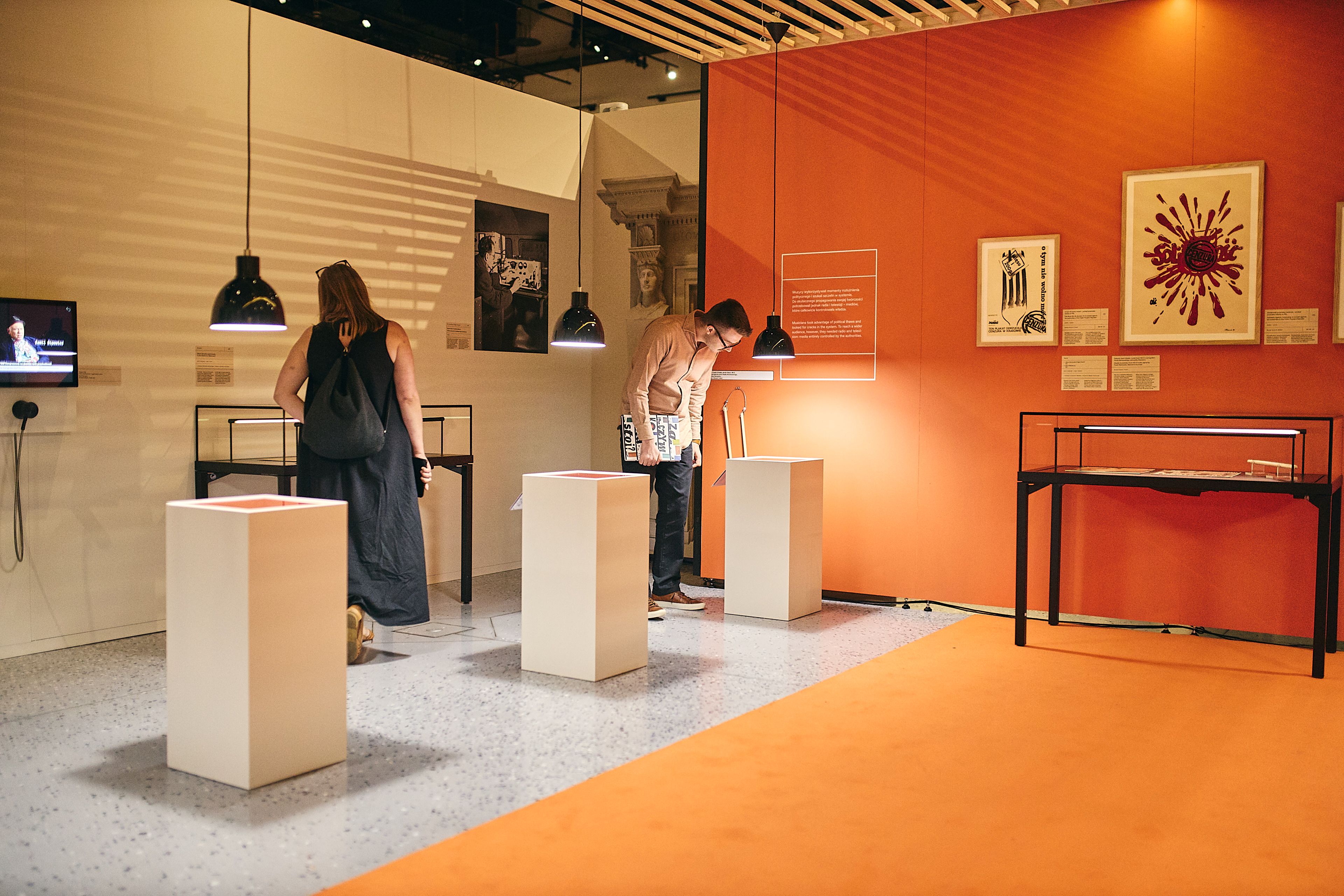
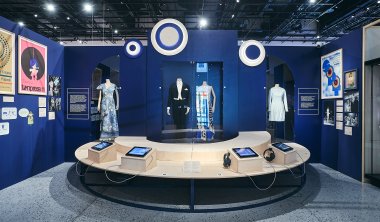
The exhibition 'What Are We Queuing Here for? The Polish People's Republic Reflected in Music' takes visitors through four decades of Polish music - from post-war attempts to rebuild cultural life, through jazz, big beat, and the festivals in Opole and Sopot, to rock, punk, and the festival in Jarocin. It is a story of artists who navigated the tension between censorship and artistic independence, of audiences searching for their own voice, and of music that could say more than reality allowed.
The exhibition features remarkable memorabilia belonging to icons of the Polish music scene - instruments, costumes, posters, archival recordings, and photographs associated with artists and bands including Mieczysław Fogg, Czesław Niemen, Maryla Rodowicz, Kora, Skaldowie, TSA, Robert Brylewski, and Wojciech Waglewski. Many of the exhibits are being made available to the public for the first time.
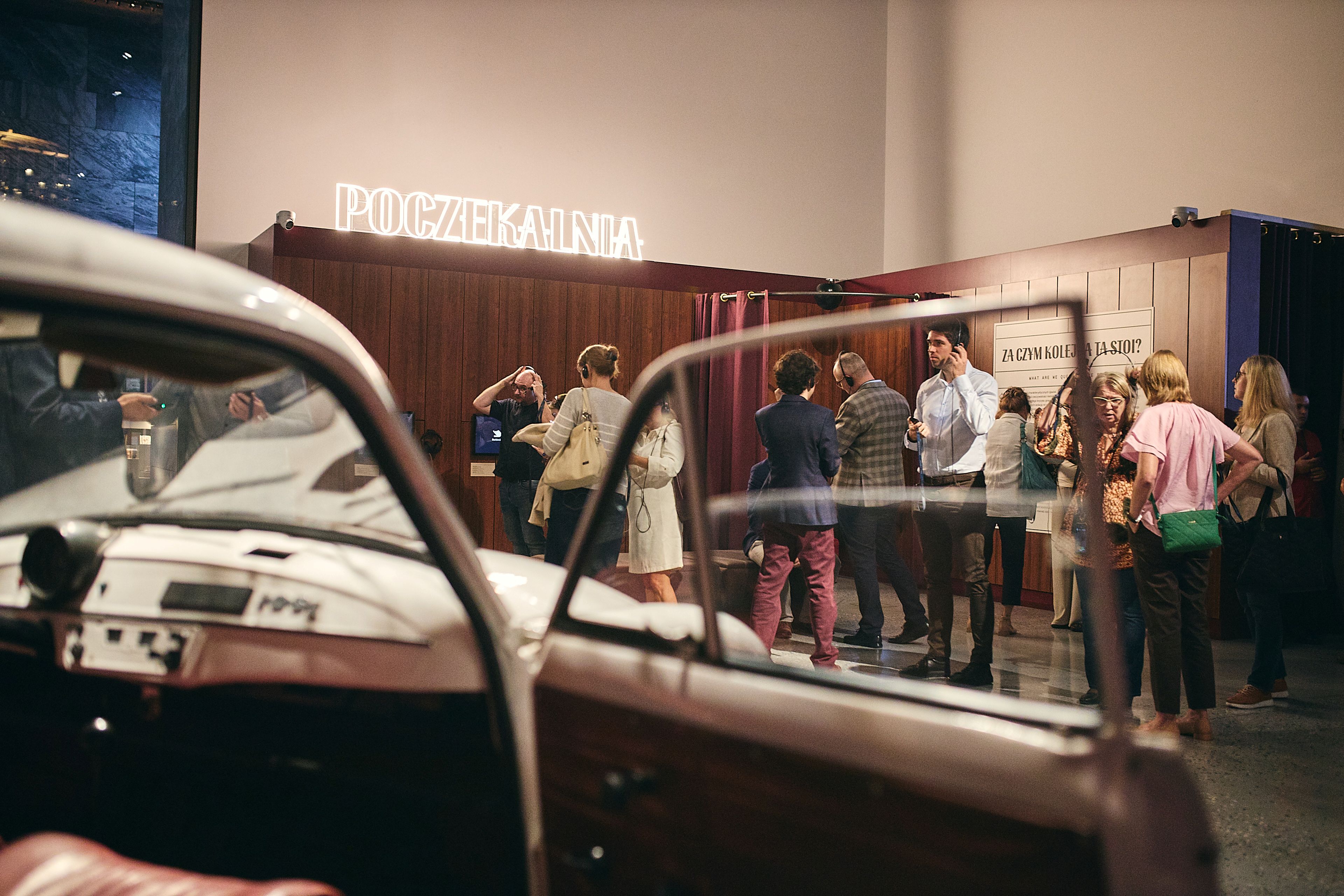
But this is not only a history of stars. It is also a story about everyday life in the Polish People’s Republic - about queues, shortages, censorship, dreams of Western records and musical instruments, sound postcards, broadcasts by Radio Luxembourg and Radio Free Europe, and festivals that were intended by some to educate and shape the public, while giving others a taste of freedom. The exhibition shows how music became a mirror of the era, reflecting its paradoxes, tensions, and aspirations.
The exhibition has been prepared in both Polish and English and is open to visitors until Dec. 6, 2026. It is accompanied by an extensive programme of events: educational classes and workshops, film screenings, a fashion show, cultural and recreational events inspired by popular forms of entertainment from the era, as well as guided tours, debates, lectures, and themed walks.
A roughly 300-page exhibition catalogue is available for purchase at the museum shop. This accessible publication focuses on popular song during the Polish People’s Republic and is richly illustrated with period photographs and memorabilia associated with the most famous performers.
The book accompanies the temporary exhibition at the Polish History Museum ( Sept. 3 – Dec. 6, 2026). Its narrative is divided into eight sections corresponding to the thematic structure of the exhibition. The opening chapter, Café Fogg (named after the music café founded by Mieczysław Fogg in 1945 in war-ravaged Warsaw), tells the story of popular songwriting in the 1940s and 1950s, immediately after the end of the Second World War. The chapter Queueing recalls the Polish People’s Republic as an era of shortages and restrictions - ones that affected musicians as well. K-12: The Censor’s Room recounts artists’ struggles with censorship. The chapter The Record Pressing Plant explores the birth and flourishing of big beat alongside the development of youth culture in the 1960s. Radio and the Street examines the role of music in protests against the authorities and the circulation of songs through the underground press and informal networks. The Stage presents the festival scene - not only Sopot and Opole, but also events closely associated with the former political system. The Cabaret Cellar focuses on the best-known cabarets. The final chapter, Every Winter Must Pass, whose title recalls a line from a song by the band Voo Voo, deals with the final decade of the Polish People’s Republic and its most distinctive musical phenomena: the Jarocin Festival and the flourishing of the counterculture.
The narrative is complemented by a list of the materials presented in the exhibition, including audio and video materials.
One of the publication’s particular strengths is its graphic design by Paweł Osial, a book designer and typeface designer. Especially for this book, the artist created two new typefaces: Feler and Wars.
♦ Content consultants: Piotr Metz (consultations), Jarosław Szubrycht (consultations, review), Maciej Wzorek, Paulina Błaszczykiewicz (research), Piotr Gnidiuk, Wioletta Trzaskoma (licensing)
♦ Exhibition design: JAZ+Architekci
♦ Visual identity: JAZ+Architekci, ONTO Studio
♦ Exhibition contractor: Ekspos
♦ Project team: Magdalena Bociarska, Artur Bogusz, Michał Bordzoł, Jakub Bryndal, Damian Cholewiński, Aleksandra Domaradzka, Hermina Haintze, Justyna Hanula, Piotr Kamiński, Wojciech Komorowski, Karolina Korek, Alicja Kosterska, Małgorzata Kowalczyk, Agata Krok, Anna Kucharska, Magdalena Lisowska, Patryk Łempicki, Justyna Musielewicz, Ewelina Nagrodzka, Michał Rogalski, Katarzyna Szafrańska, Gabriel Szeremeta, Marta Tabakiernik.
Organizer: the Polish History Museum in Warsaw.
Media partners: Polish Radio, Polish Radio Programme 1, Rzeczpospolita, TVP Kultura, Jazz Forum magazine, historical portal dzieje.pl, Onet.pl


 03/09/26 - 06/12/26
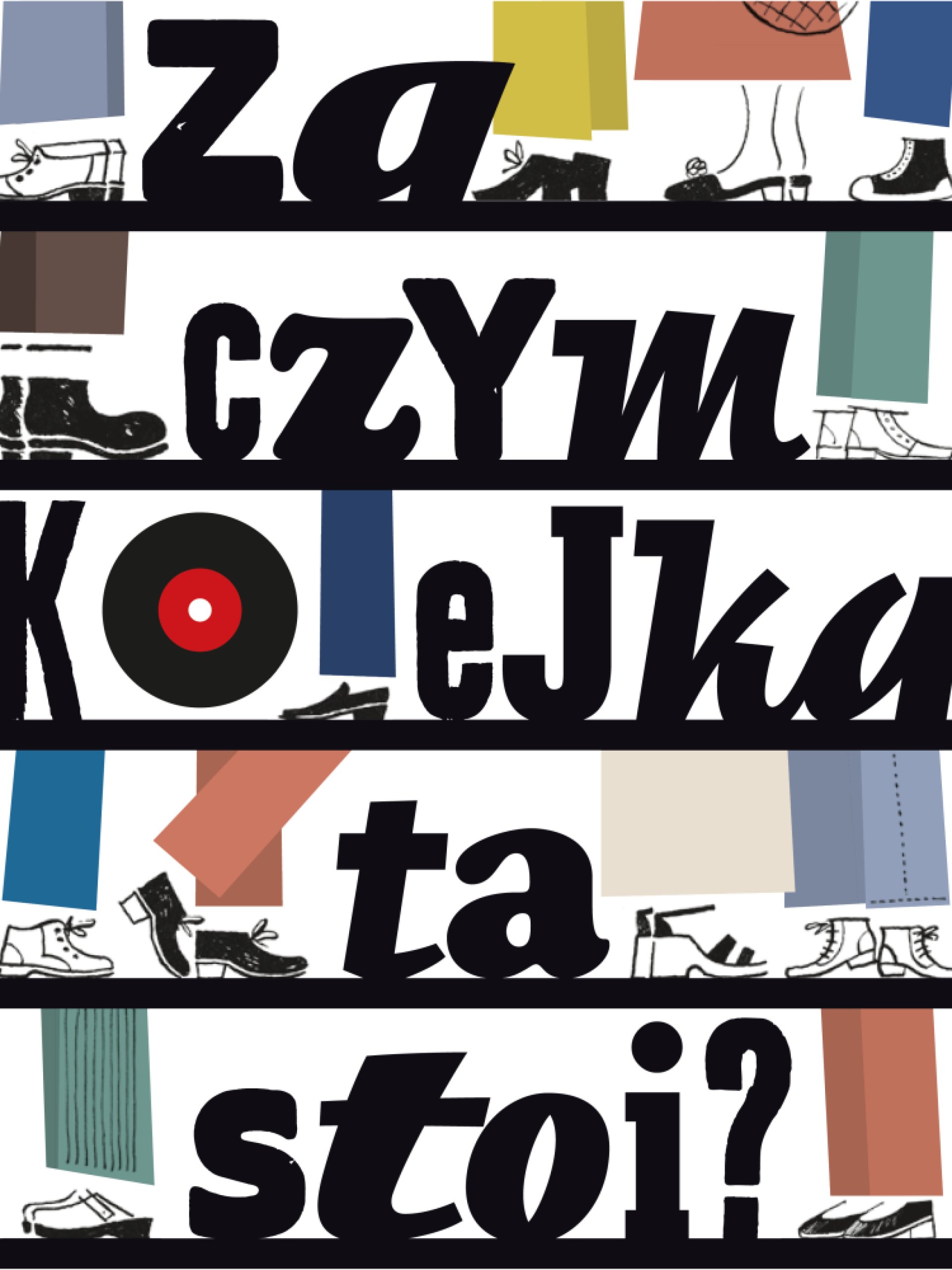
'What are we queuing
03/09/26 - 06/12/26
'What are we queuing