

Narratio. A Digital Repository of Oral History
The project titled “Narratio. A Digital Repository of Oral History” has been granted funding under the European Funds for Digital Development (EFDD) program, Measure 2.3: Digital Accessibility and Reuse of Information".
What is “Narratio”?
“Narratio” is the first initiative of its kind in Poland, aiming to:
The project was created in response to the real needs of various groups of users — from researchers, teachers, and students to community archivists and public institutions. The analysis of existing barriers showed that the key challenge is the fragmentation and limited accessibility of oral history resources. Thanks to the platform, these materials will be made available in a consistent and organized way, making it easier to search, use transcriptions, and incorporate them into educational or research activities.
Project duration: January 1, 2026 – December 31, 2028
- digitize, protect, and make available oral history resources,
- integrate dispersed archives from various institutions,
- standardize metadata,
- provide modern tools for accessing historical testimonies.
The project was created in response to the real needs of various groups of users — from researchers, teachers, and students to community archivists and public institutions. The analysis of existing barriers showed that the key challenge is the fragmentation and limited accessibility of oral history resources. Thanks to the platform, these materials will be made available in a consistent and organized way, making it easier to search, use transcriptions, and incorporate them into educational or research activities.
Project duration: January 1, 2026 – December 31, 2028




Project objectives
- Increasing access to oral history resources:
- creation of a unified digital portal with a repository of recordings and metadata,
- improving access to materials previously scattered across various institutions,
- integration with international repositories (e.g. Europeana),
- expanding the audience base (researchers, teachers, students, and history enthusiasts).
- Developing a metadata standard for oral history:
- unifying methods of cataloging, searching, and analyzing materials,
- ensuring interoperability between institutions working with oral history,
- laying the groundwork for automating resource description processes.
- Protecting cultural and artistic heritage:
- digitizing and archiving unique historical testimonies,
- permanently preserving oral accounts,
- making materials available in digital form as educational and research resources.
- Increasing the efficiency of resource sharing processes:
- automating and streamlining the search and publication of materials,
- implementing digital tools: APIs, transcription, and speech recognition systems,
- integrating with other national and international repositories,
- providing training for cultural institution staff in digitization and content management.
Target Groups of the Project
The target groups of the “Narratio” project include history researchers, teachers, pupils and students, community archivists, public institutions, and all audiences interested in oral history. A needs analysis has shown that these users face significant barriers resulting from the fragmentation of resources, their limited digital accessibility, and the lack of consistent descriptive standards and search tools. The project addresses these needs by creating a unified platform that provides access to recordings, metadata, and transcripts in an organized, user-friendly form.
Project Outcomes
The outcome of the “Narratio” project will be the launch of a nationwide digital platform integrating oral history resources from various institutions. More than 7,300 digital documents will be made available, including audio and video recordings as well as their accompanying metadata and transcripts. The project will contribute to increasing access to cultural resources, improving their online visibility, and enabling their reuse in educational, academic, and research activities. The project ensures the possibility of reusing the shared information and digital resources in accordance with open data principles and the requirements of the European Funds for Digital Development program.
Project partners
The “Narratio” project is with the participation of:
After the project’s completion, the developed infrastructure will remain open to additional institutions and organizations wishing to share their oral history resources.
- Polish History Museum (project leader),
- Center of Community Archives,
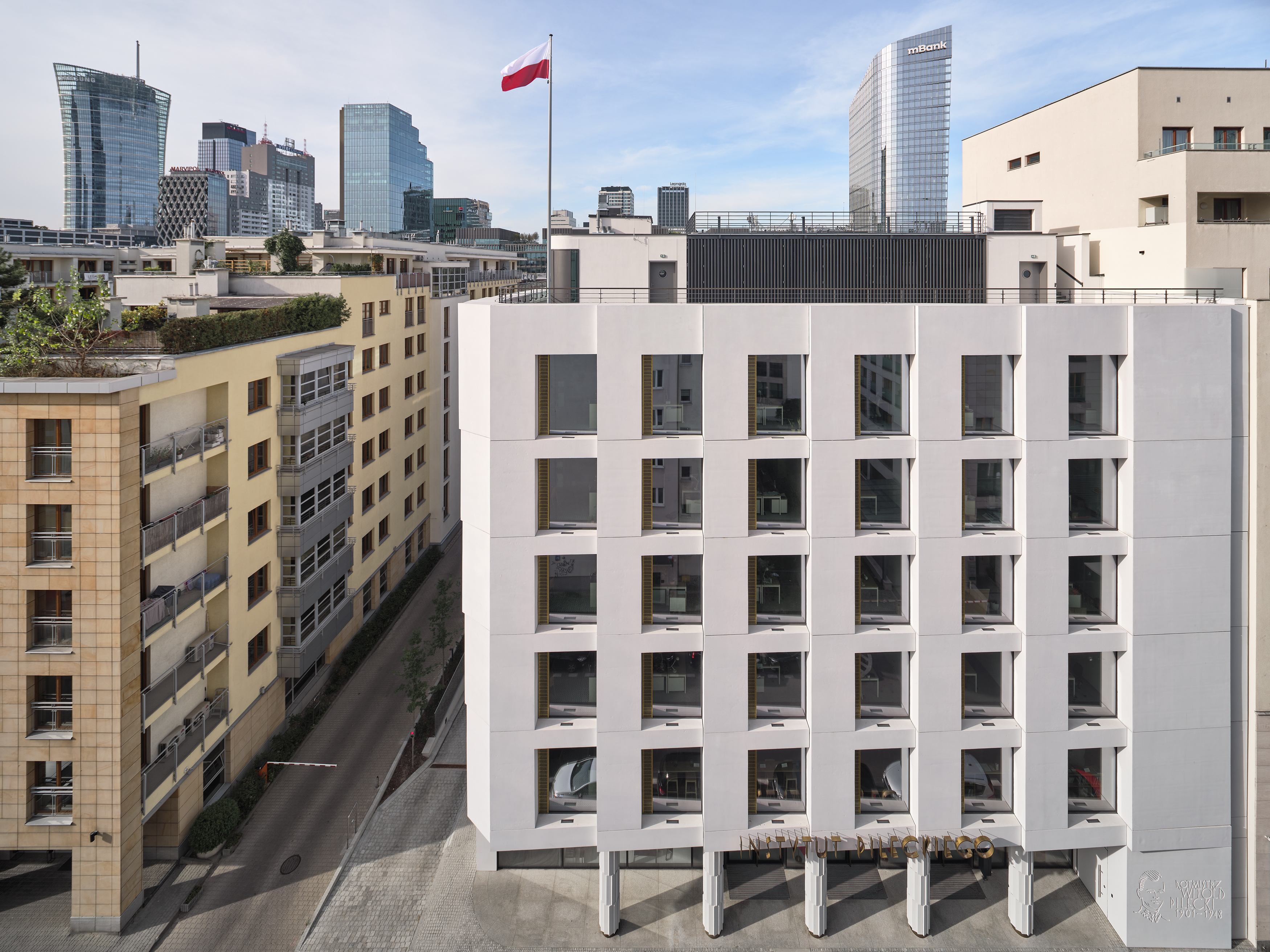
- Witold Pilecki Institute of Solidarity and Valor,
- Central Museum of Prisoners of War.
After the project’s completion, the developed infrastructure will remain open to additional institutions and organizations wishing to share their oral history resources.

A shared platform and modern technology
As part of the project, a modern online platform will be created that will:
- integrate the resources of four partner institutions,
- enable searching and browsing of materials through APIs and AI tools,
- allow integration with national data aggregators (e.g., KRONIK@) and international ones (e.g., Europeana),
- provide automatic transcription and advanced content search features.
The project “Narratio. A Digital Repository of Oral History” is carried out under the measure FERC.02.03 Digital Accessibility and Reuse of Information, within the European Funds for Digital Development 2021–2027 program, co-financed by the European Regional Development Fund.
The total value of the project is PLN 16,018,357.81, including PLN 12,768,233.01 from the European funds and PLN 3,250,124.80 from the state budget.
The total value of the project is PLN 16,018,357.81, including PLN 12,768,233.01 from the European funds and PLN 3,250,124.80 from the state budget.
Thank you!
We would like to thank all partners and supporting institutions for their trust and cooperation. The “Narratio” project is a milestone towards broader access to testimonies of the past and our shared cultural heritage – for researchers, teachers, students, and all those interested in history.
